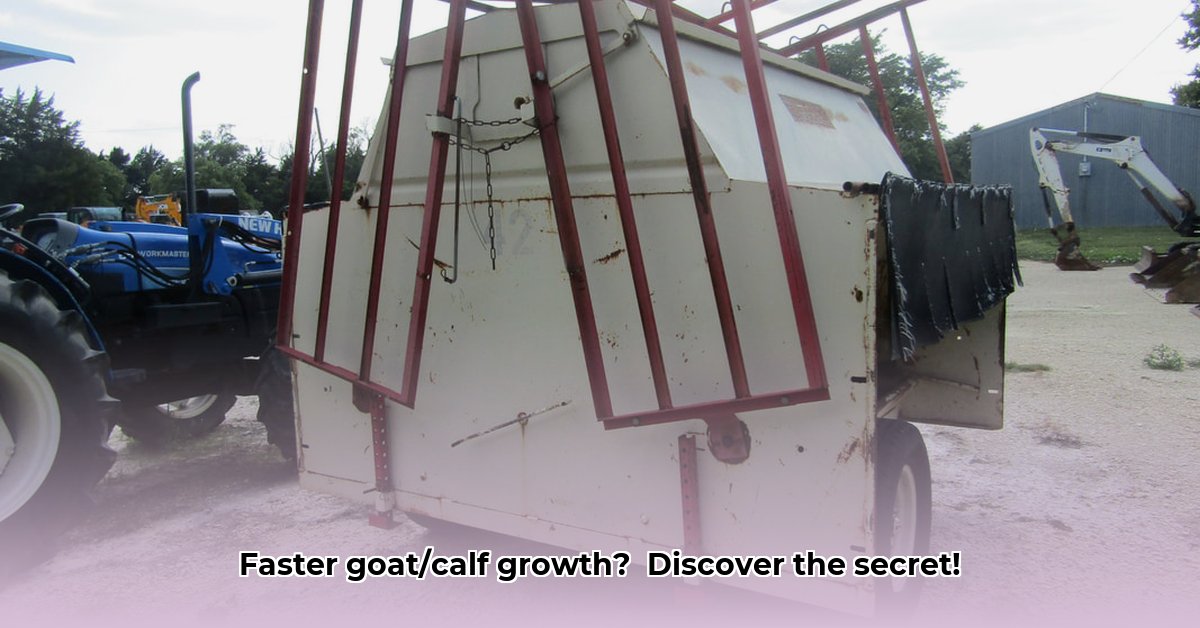
Raising healthy, thriving livestock is a constant balancing act between maximizing growth, minimizing costs, and respecting environmental sustainability. Creep feeding—providing supplemental feed to young animals in a separate area—offers a potential solution for achieving faster growth. While the benefits are clear, understanding the nuances and implementing a sustainable creep feeding system requires careful planning. This guide provides actionable steps for farmers, suppliers, researchers, and policymakers to optimize creep feeding practices for improved efficiency and environmental responsibility. For goat deworming options, check out Tractor Supply's selection.
Understanding Creep Feeding and Its Potential
Creep feeding offers a straightforward approach to boosting the growth of young animals like calves and goats. By providing supplemental nutrition in a dedicated creep feeder, you reduce competition with the mother for feed resources, leading to faster weight gain and improved overall health. Tractor Supply offers a variety of durable and easy-to-clean creep feeder options suitable for different animal species and farm sizes. However, creep feeding isn't a magic bullet; successful implementation necessitates a thoughtful approach.
Weighing the Pros and Cons
The decision to utilize creep feeding involves careful consideration of both advantages and disadvantages:
| Advantages | Drawbacks |
|---|---|
| Accelerated weight gain | Increased initial investment in feeders and specialized feed. |
| Improved animal health, potentially reducing vet bills | Requires diligent feed management to prevent waste and overgrazing. |
| Reduced competition for resources with mothers | May increase disease transmission if hygiene protocols are not rigorously followed. |
| Enhanced feed efficiency | Long-term environmental impacts require further robust research and data analysis. |
A Practical Step-by-Step Guide for Farmers
This section outlines a practical framework for implementing a successful and sustainable creep feeding program.
Step 1: Conduct a Thorough Cost-Benefit Analysis
Before investing in a creep feeding system, perform a detailed cost-benefit analysis. This should factor in the costs of the creep feeder (from Tractor Supply or otherwise), specialized creep feed, labor involved in maintaining the system, potential increases in animal weight and market value, and estimated savings from reduced veterinary expenses due to healthier animals. A simple spreadsheet or dedicated farm management software can greatly facilitate this process. What is the potential return on investment (ROI) for your specific livestock and market conditions?
Step 2: Sourcing Sustainable Feed Options
Prioritize high-quality, sustainable feed options. Consider locally sourced feeds to minimize transportation costs and environmental impact. Organic and non-GMO options can further enhance the sustainability of your operation. The quality of your feed directly impacts the health and growth of your young animals. Where can you source high-quality, sustainable feed within your region?
Step 3: Selecting the Appropriate Creep Feeder Design
Tractor Supply provides various creep feeder designs. Choose a feeder appropriate for your livestock species (calves, goats, lambs), farm size, and budget. Look for durable, easily cleanable designs to minimize feed waste and the risk of disease transmission. Consult with other farmers or agricultural extension services for recommendations based on local conditions. What specific features are most important to you in a creep feeder (durability, ease of cleaning, capacity, etc.)?
Step 4: Implementing Effective Pasture Management Strategies
Responsible pasture management is crucial for the long-term success of your creep feeding program. Implement rotational grazing to prevent overgrazing, ensuring sufficient forage and protecting the health of your land. How can you best manage pasture rotation to ensure adequate forage while preventing overgrazing?
Step 5: Establishing Stringent Hygiene Protocols
Maintaining optimal hygiene is essential for preventing disease spread. Regularly clean and disinfect the creep feeder to minimize disease transmission. This contributes to healthier animals and a more efficient farming operation. How frequently should you clean and disinfect the creep feeder to minimize bacterial and viral contamination?
Addressing the Long-Term Sustainability of Creep Feeding
While the immediate benefits of creep feeding are evident, long-term sustainability requires careful consideration. Currently, comprehensive data on the long-term environmental impact of creep feeding is limited. Further research is needed to fully understand the implications of this practice across various feed types, livestock breeds, and farming systems. What are the key research areas needed to comprehensively understand the environmental impact of creep feeding?
Collaboration: The Key to a Sustainable Future
Successful sustainable creep feeding requires collaboration among all stakeholders. Farmers need access to sustainable feed options and clear guidelines for best practices. Suppliers must provide high-quality, environmentally friendly products. Researchers need to conduct more long-term studies to provide much-needed data on long-term impacts. Policymakers have a vital role in creating supportive policies that encourage sustainable agricultural practices. What cooperative initiatives could accelerate the development of more sustainable creep feeding methods?
Key Takeaways
- Creep feeding can significantly boost animal growth and overall health, but requires careful planning.
- A comprehensive cost-benefit analysis is crucial before implementation.
- Sourcing sustainable and high-quality feed is essential for both animal health and environmental stewardship.
- Proper pasture management and stringent hygiene protocols are vital for long-term success.
- Further research is needed to fully understand the long-term environmental impact of creep feeding.
- Collaboration across all stakeholders (farmers, researchers, suppliers, policymakers) is critical for ensuring the sustainable development and utilization of creep feeding.
This guide provides a foundation for implementing successful and sustainable creep feeding practices. Remember, continuous learning and adaptation are key to optimizing your system for both economic success and environmental responsibility.